Some of the most beautiful places in Paris don’t require an entrance ticket.
Petit Palais is one of them.
Located just off the Champs-Élysées, this magnificent art museum offers something that feels almost too good to be true: beautiful paintings, impressive sculptures, extraordinary architecture and a peaceful courtyard — all with free admission to its permanent collection.
We visited on a morning in October, and what I expected to be a quick museum stop turned into one of our favorite cultural experiences in Paris.
If you’re looking for a free museum in Paris that’s genuinely worth your time, Petit Palais deserves a place on your itinerary.
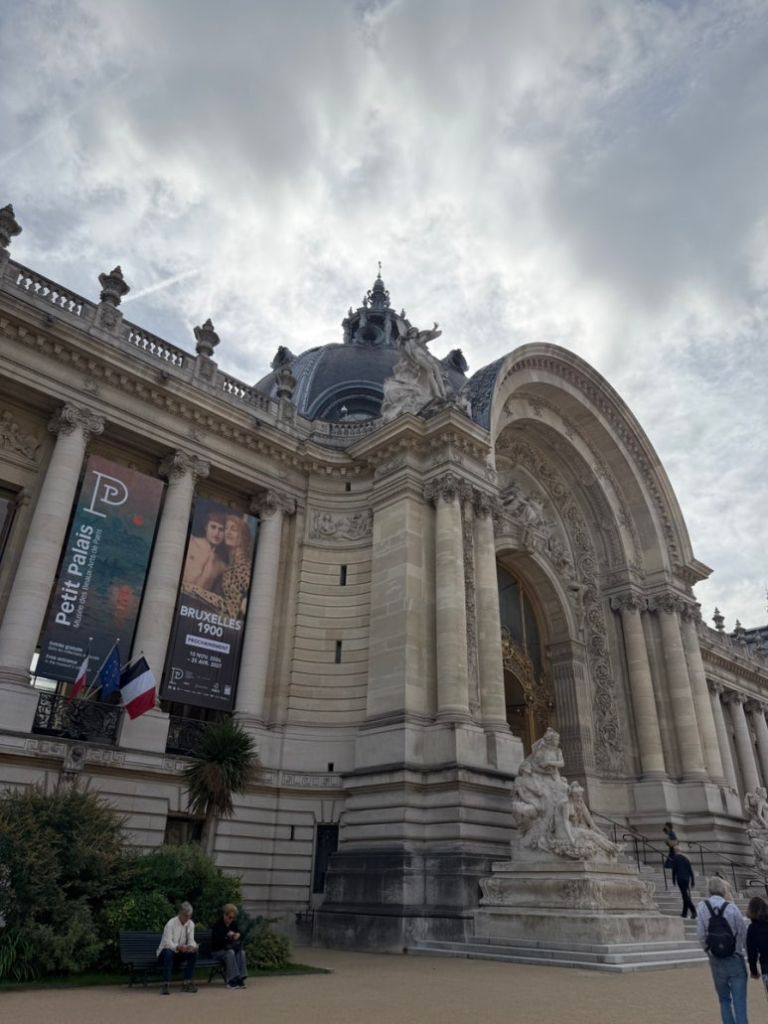
Petit Palais Paris: Quick Visitor Guide
| Details | |
|---|---|
| Admission | Free permanent collection |
| Opening hours | Tuesday–Sunday, 10 AM–6 PM |
| Closed | Mondays and selected holidays |
| Address | Avenue Winston Churchill, 75008 Paris |
| Nearest Metro | Champs-Élysées–Clemenceau |
| Recommended visit | 1.5–2 hours, or longer for art lovers |
| Nearby | Grand Palais, Pont Alexandre III |
| Café | Yes, overlooking the courtyard |
Temporary exhibitions may require a separate ticket. Check the official website for updated hours and gallery access.
Why Is Petit Palais Worth Visiting?
Paris has no shortage of famous museums.
The Louvre and Musée d’Orsay naturally attract much of the attention, but Petit Palais offers a different kind of experience.
It’s a place where you can enjoy remarkable art without feeling the pressure of a major museum itinerary.
You can spend time with a single painting, wander through beautiful galleries or simply admire the architecture.
And unlike many of Paris’s most famous museums, the permanent collection is free.
We arrived in the morning and passed through the security check without much waiting.
By the time we left, however, the entrance queue had stretched outside.
My first tip: visit early, especially if you want a quieter experience.
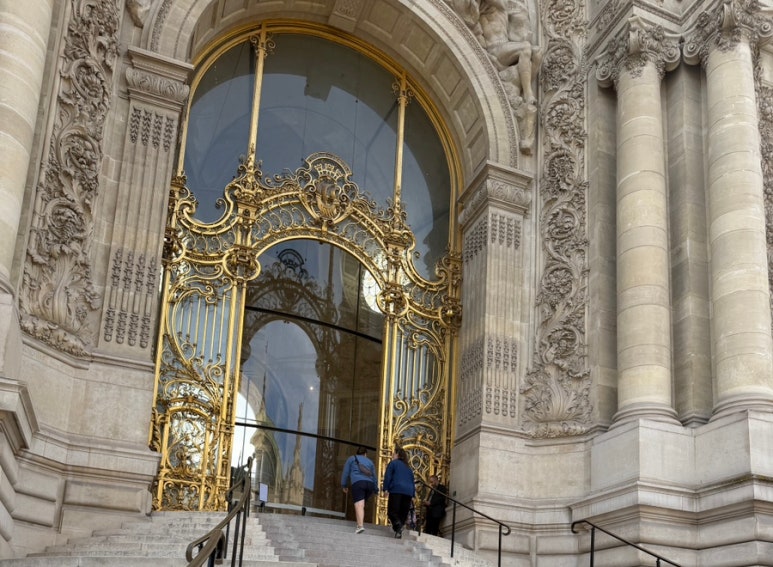
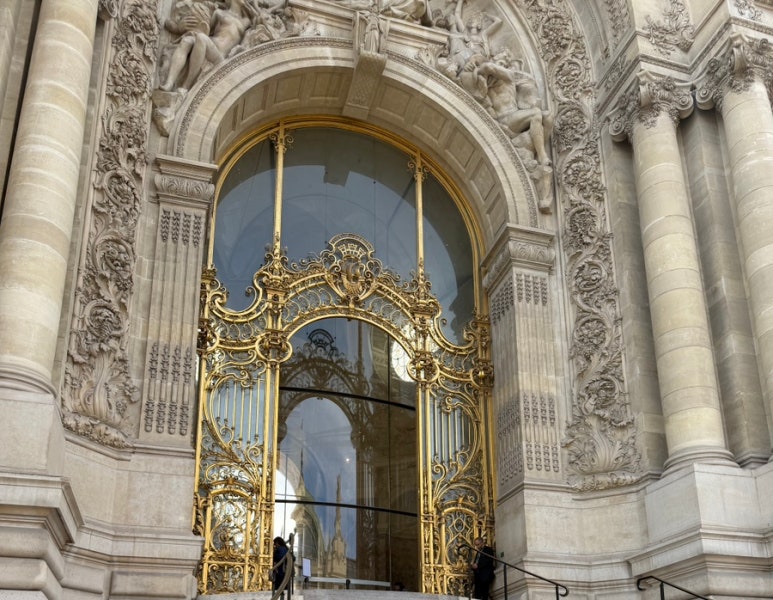
A Palace Built for the 1900 Paris World’s Fair
Despite its name, which means “Small Palace,” Petit Palais is anything but modest.
The building was designed by French architect Charles Girault for the 1900 Exposition Universelle, the Paris World’s Fair.
This was a time when Paris wanted to showcase its artistic achievements, architecture and technological progress to the world.
Petit Palais, Grand Palais and the nearby Pont Alexandre III were all part of that extraordinary transformation.
The museum opened as the City of Paris Museum of Fine Arts in 1902.
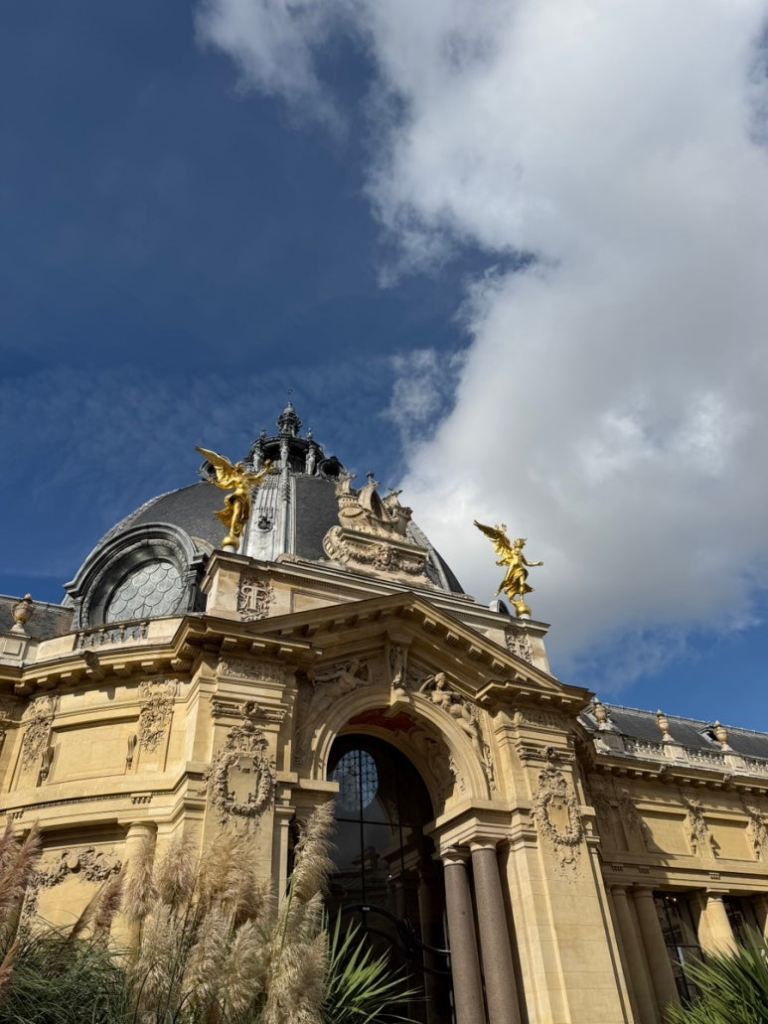
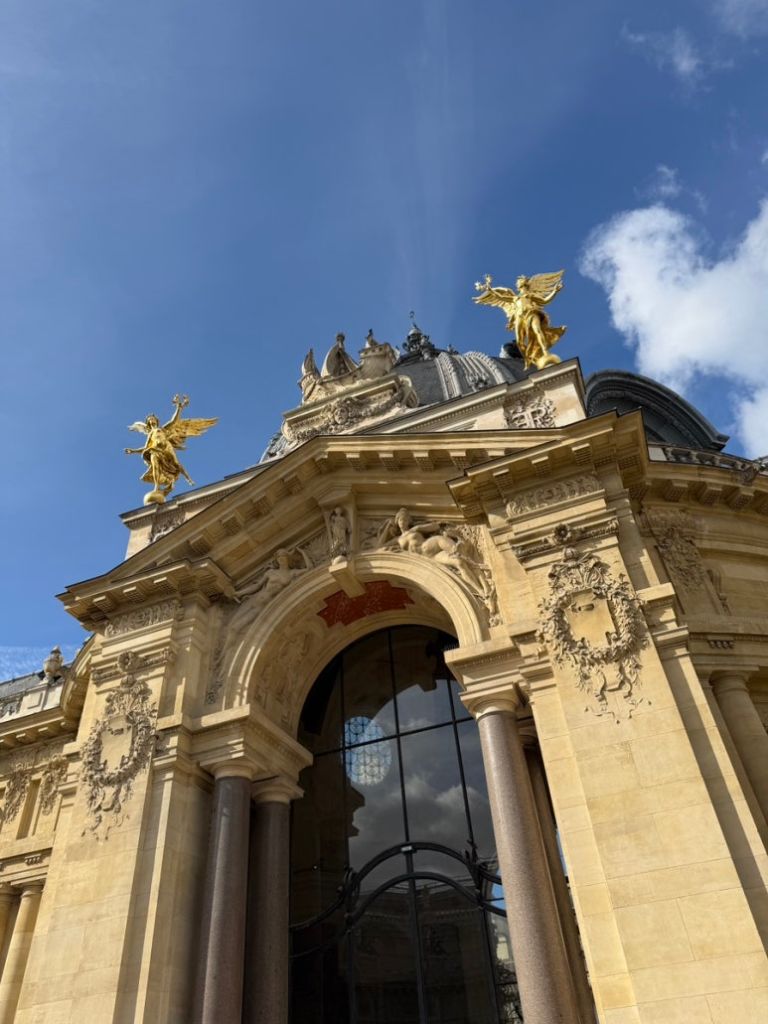
Today, its architecture is one of the main reasons to visit.
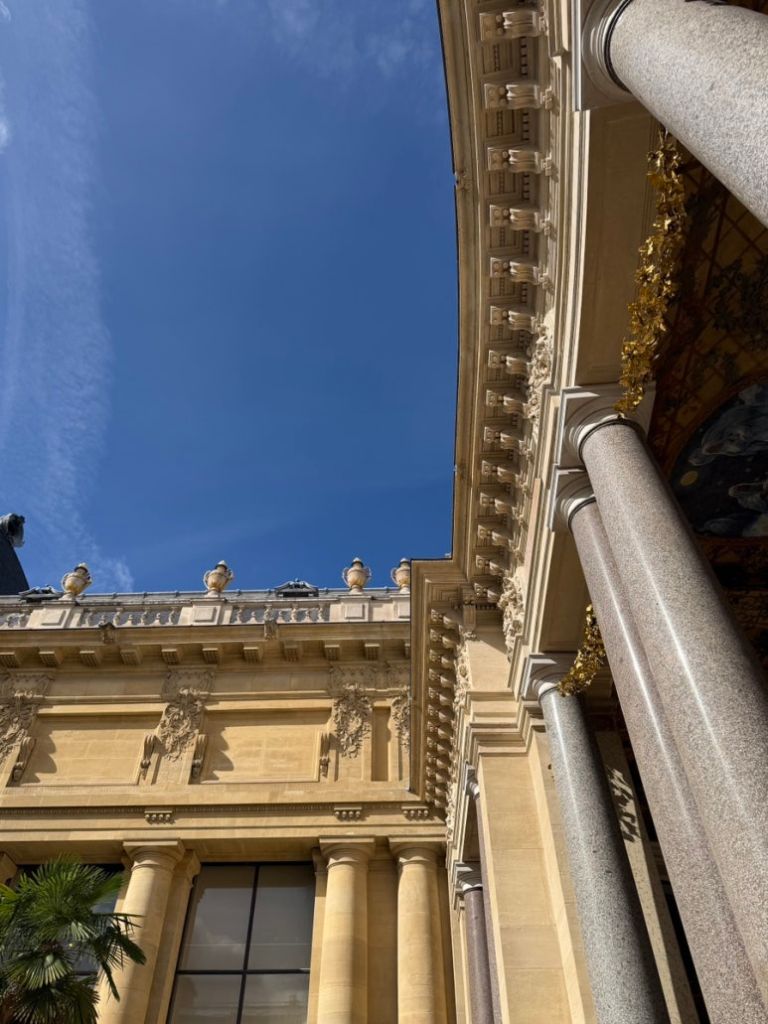
From the monumental entrance to the decorative ceilings, columns and intricate details, the building feels like an artwork in itself.
Even if you aren’t particularly interested in paintings, I think you’ll find plenty to admire here.
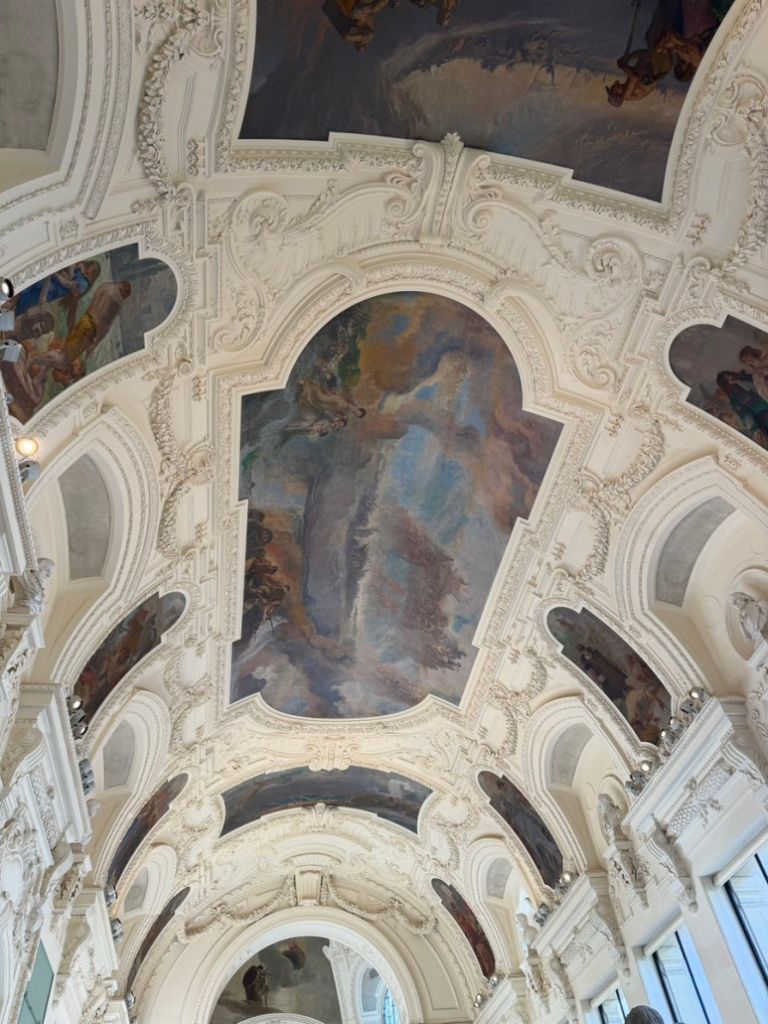
Art Highlights at Petit Palais: More Than Just Monet
One of the things I enjoyed most was the variety of art.
The museum’s collections span centuries, allowing visitors to discover different artistic styles and subjects.
We moved from elegant portraits to large-scale paintings depicting everyday life, work and hardship.
Rather than trying to see everything, we took our time with a few works that caught our attention.
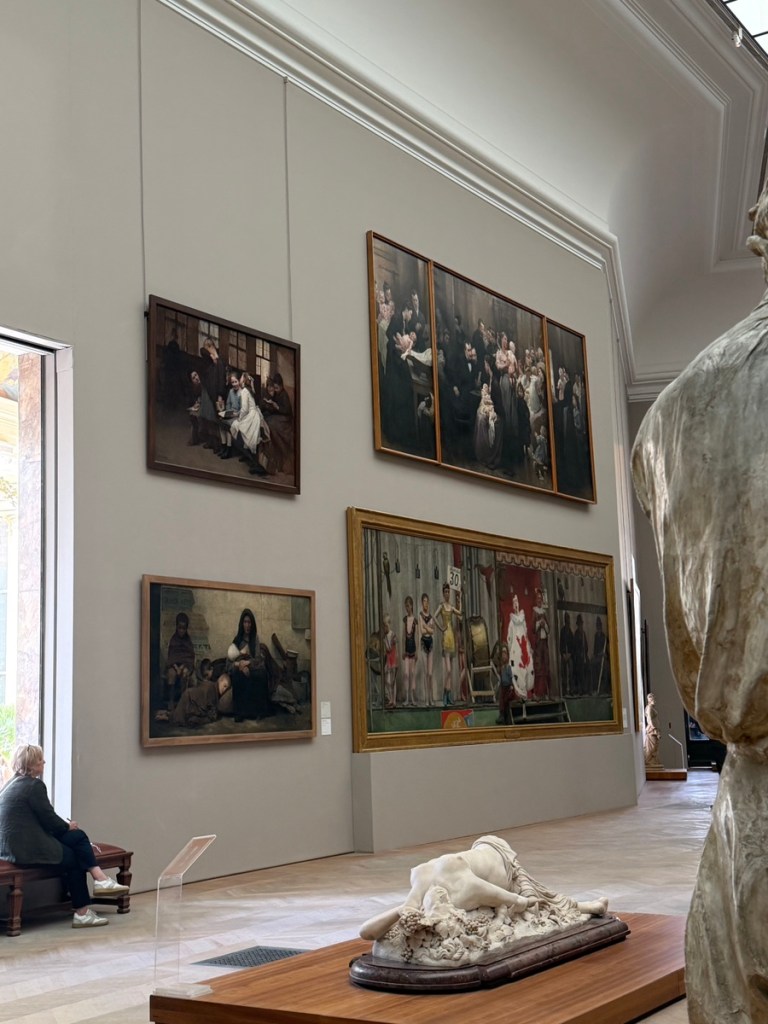
Fernand Pelez: The People Behind the Performance
One of the most memorable paintings was Grimaces et misère – Les Saltimbanques (1888) by Fernand Pelez.
The painting depicts a group of street performers and entertainers dressed in theatrical costumes.
But look closely at their faces.
Instead of excitement and joy, many appear tired, serious or deeply unhappy.
The contrast between their colorful clothing and exhausted expressions is striking.
It’s a powerful reminder that art doesn’t always celebrate beauty or wealth. Sometimes it reveals the difficult lives hidden behind public entertainment.
This enormous painting was one of the works that made us stop and look much longer than expected.
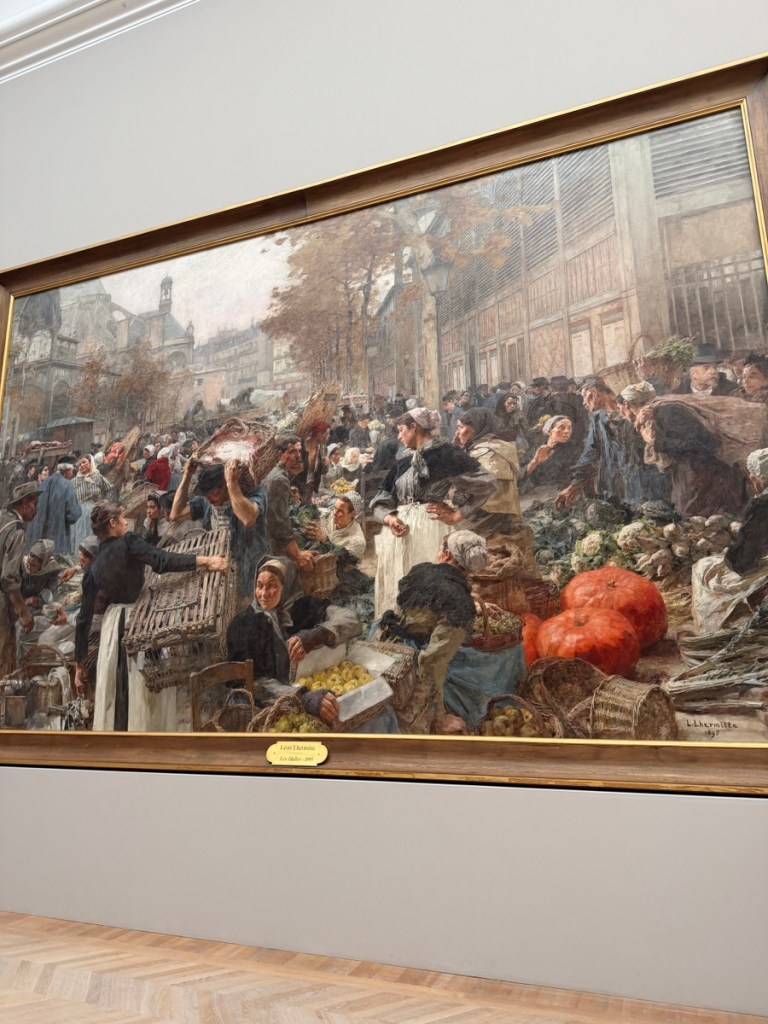
Léon Lhermitte: Everyday Life in Old Paris
Another impressive work is Les Halles (1895) by Léon Lhermitte.
The painting captures the activity of Paris’s historic central food market.
Vendors, customers and workers fill the scene, offering a fascinating glimpse into ordinary life in nineteenth-century Paris.
I loved how the painting made history feel personal.
Instead of kings, emperors or grand monuments, we were looking at people buying food, working and going about their daily routines.
It’s the kind of painting that encourages you to notice the small details.
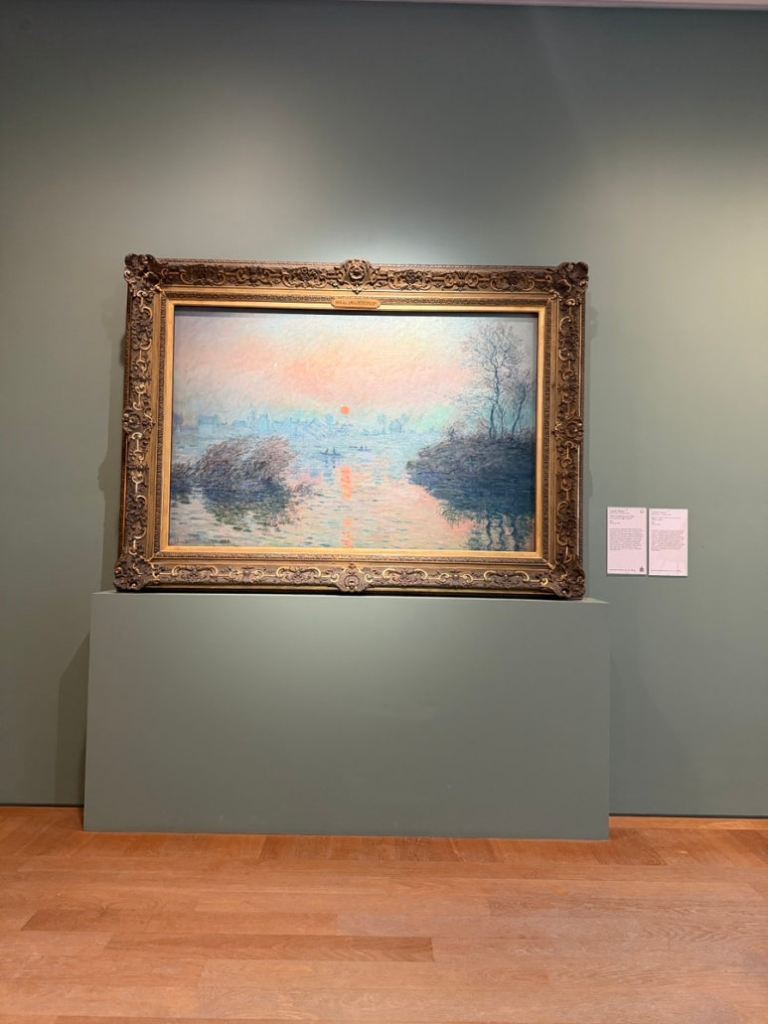
Claude Monet: A Different Way of Seeing
Petit Palais also has a beautiful work by Claude Monet, Sunset on the Seine at Lavacourt, Winter Effect (1880).
After seeing paintings filled with carefully defined figures and realistic details, Monet’s approach feels noticeably different.
The emphasis shifts toward light, color and atmosphere.
The water, sky and winter landscape seem to blend together, capturing the impression of a particular moment rather than every precise detail.
This was especially meaningful for our family because we were also exploring places connected to Monet during our time in France.
Seeing his work in Paris added another dimension to those experiences.
Gallery displays can change, so check the museum’s current collection information if you’re visiting specifically to see Monet.
The Petit Palais Courtyard Is Worth the Visit Alone
If there’s one place you absolutely shouldn’t miss, it’s the interior courtyard.
This might have been my favorite part of the entire museum.
The curved colonnades, decorative ceilings, beautiful mosaic floors and gilded architectural details create an atmosphere that feels wonderfully Parisian.
The courtyard garden offers a peaceful contrast to the busy streets outside.
It’s easy to forget that you’re just a short walk from the Champs-Élysées.
I especially loved the way the columns frame the garden.
Every angle seems to reveal another beautiful architectural detail.
Take your time here.
Look up at the ceilings, admire the mosaics and enjoy the quiet atmosphere.
A Café in One of Paris’s Prettiest Museum Courtyards
Petit Palais also has a café overlooking its courtyard garden.
It’s a lovely setting for a coffee or a relaxed break between galleries.
You don’t need to rush through the museum to make the most of your visit.
In fact, I think Petit Palais is best enjoyed slowly.
A few paintings, a walk through the courtyard and a coffee surrounded by beautiful architecture can make for a wonderful Paris morning.
Can You Visit Petit Palais with Children?
Absolutely.
We visited with our two children, and it turned out to be an excellent introduction to art museums in Paris.
The large paintings were especially engaging because there was so much to observe.
Instead of explaining every artist or historical period, we asked simple questions:
What do you think is happening in this painting?
How do you think these people are feeling?
What details do you notice first?
It made the experience much more interactive.
We also saw visitors sketching in front of artworks, which was lovely to watch.
For children interested in drawing, seeing people spend time studying and creating art can be inspiring.
We eventually finished our visit at the museum shop, where we picked up a Monet notebook and pencils.
A small souvenir, but a lovely reminder of the day.
What to See Near Petit Palais
One of the best things about visiting Petit Palais is its location.
You can easily combine it with some of Paris’s most beautiful landmarks.
Grand Palais
Directly across the street is Grand Palais, another extraordinary building created for the 1900 World’s Fair.
Its enormous glass-and-steel roof is one of the architectural highlights of Paris.
Unlike Petit Palais’s free permanent collection, Grand Palais mainly hosts ticketed exhibitions and cultural events.
If there’s an exhibition you’re interested in, the two museums make an excellent combination.
Pont Alexandre III
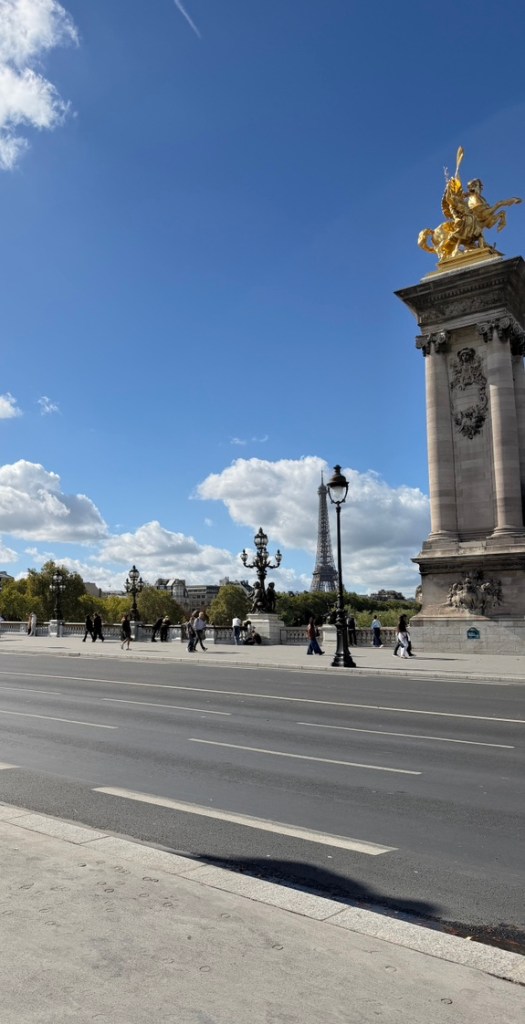
Just a short walk away is Pont Alexandre III, one of the most ornate bridges in Paris.
Also completed for the 1900 World’s Fair, the bridge connects the Grand Palais area with the Invalides district across the Seine.
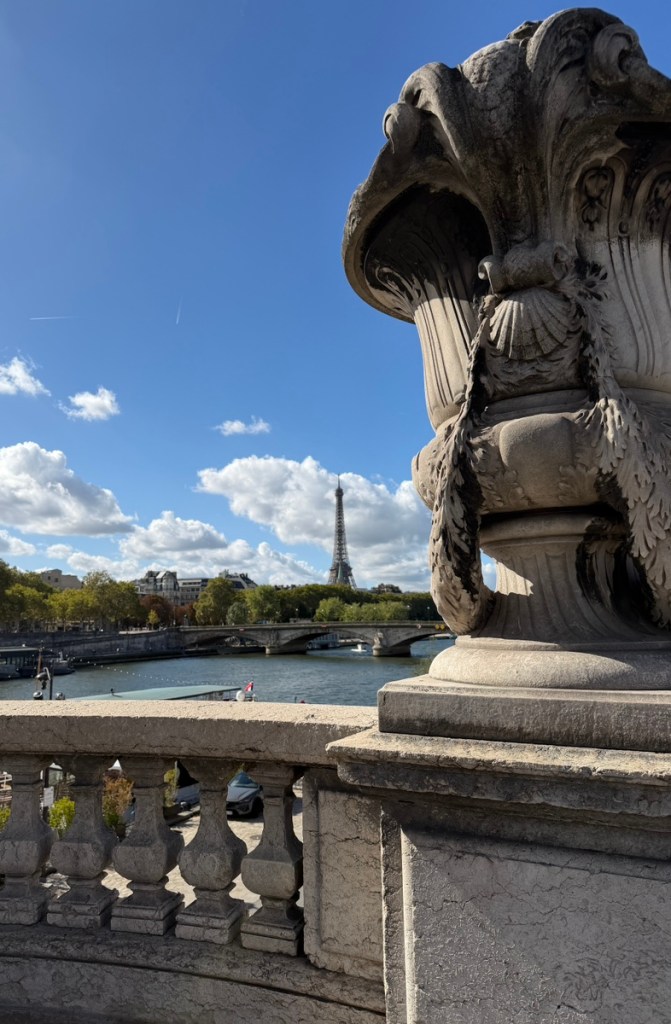
Its golden statues, elaborate lamps and sculptural details make it one of the city’s most photogenic landmarks.
The bridge was named after Russian Emperor Alexander III, reflecting the Franco-Russian alliance of the late nineteenth century.
And of course, you can enjoy beautiful views of the Seine and the Eiffel Tower from here.
After our museum visit, we walked to the bridge and spent some time enjoying the scenery.
It’s a wonderful way to finish a visit to Petit Palais.
A Lovely Half-Day Itinerary in Paris
If you’re planning a relaxed morning in this part of Paris, here’s the route I would recommend.
Start at Petit Palais
Arrive close to opening time and explore the permanent collection.
Enjoy the courtyard
Take a break in the garden or café and admire the architecture.
See Grand Palais
Walk across the street to appreciate its impressive exterior, or visit an exhibition if you’ve booked tickets.
Walk to Pont Alexandre III
Finish with one of the most beautiful bridges in Paris and views across the Seine.
You can easily spend half a day in this area without traveling far between attractions.
Final Thoughts: Is Petit Palais Worth Visiting?
Absolutely — and not just because it’s free.
What makes Petit Palais special is the combination of art, architecture and atmosphere.
The collections are fascinating, the building is magnificent and the courtyard is one of those places where you simply want to stay a little longer.
For us, it was also a reminder that visiting an art museum doesn’t have to be about recognizing every famous artist.
Sometimes it’s enough to stop in front of a painting, notice something unexpected and become curious about the story behind it.
Petit Palais gave us exactly that experience.
And the fact that we could enjoy all of this without paying for admission made it even more remarkable.
If you’re planning a trip to Paris, don’t overlook this beautiful museum near the Champs-Élysées.
It may become one of your favorite discoveries in the city.
Official website: https://www.petitpalais.paris.fr/en


Leave a Reply